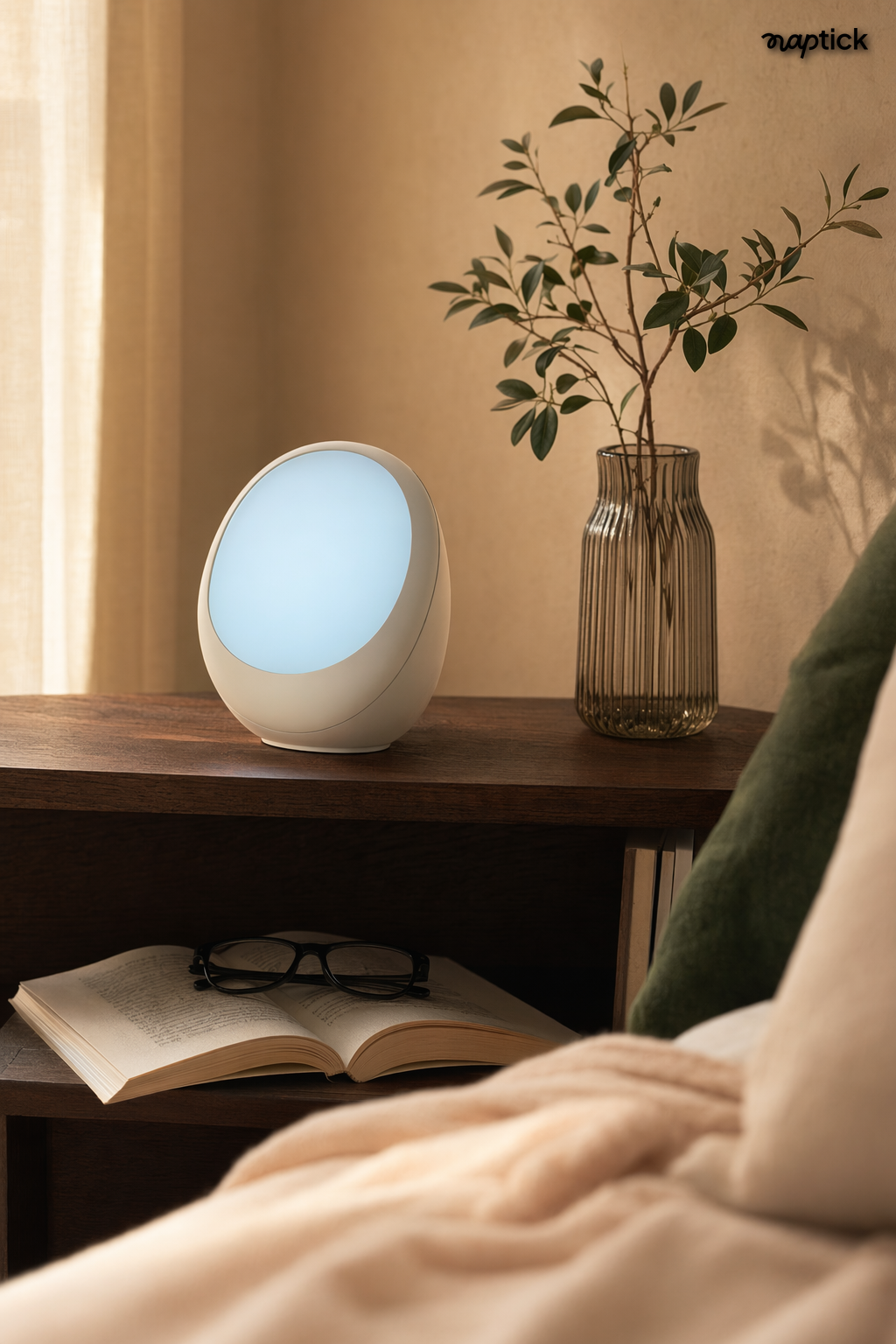
Artificial intelligence is reshaping sleep from a passive biological process into an actively optimized experience. AI-powered systems now track sleep patterns, adjust bedroom environments in real time, and deliver personalized coaching to improve rest quality.
Key Takeaways
- AI sleep tracking uses multi-modal sensors and pattern recognition to predict sleep quality based on daytime behavior, environmental inputs, and physiological signals
- Smart bedroom automation adjusts temperature, lighting, and sound in response to circadian rhythms and real-time biometric data
- Closed-loop AI coaching systems actively guide habit change through continuous feedback, unlike passive monitoring devices
- Wellness-focused AI sleep tools optimize behavior and environment but do not diagnose medical conditions like sleep apnea
- The sleep products market is forecast at $13.8 million with 5.2% growth through 2033, driven by pandemic-era demand for non-pharmaceutical solutions
How AI Sleep Tracking Turns Data Into Insights
AI is transforming sleep through three domains: tracking analytics that decode physiological patterns, environment control that adjusts conditions in real time, and behavioral coaching that adapts recommendations based on longitudinal data. These capabilities shift sleep technology from passive measurement to active intervention, creating a feedback loop between data collection and personalized action.
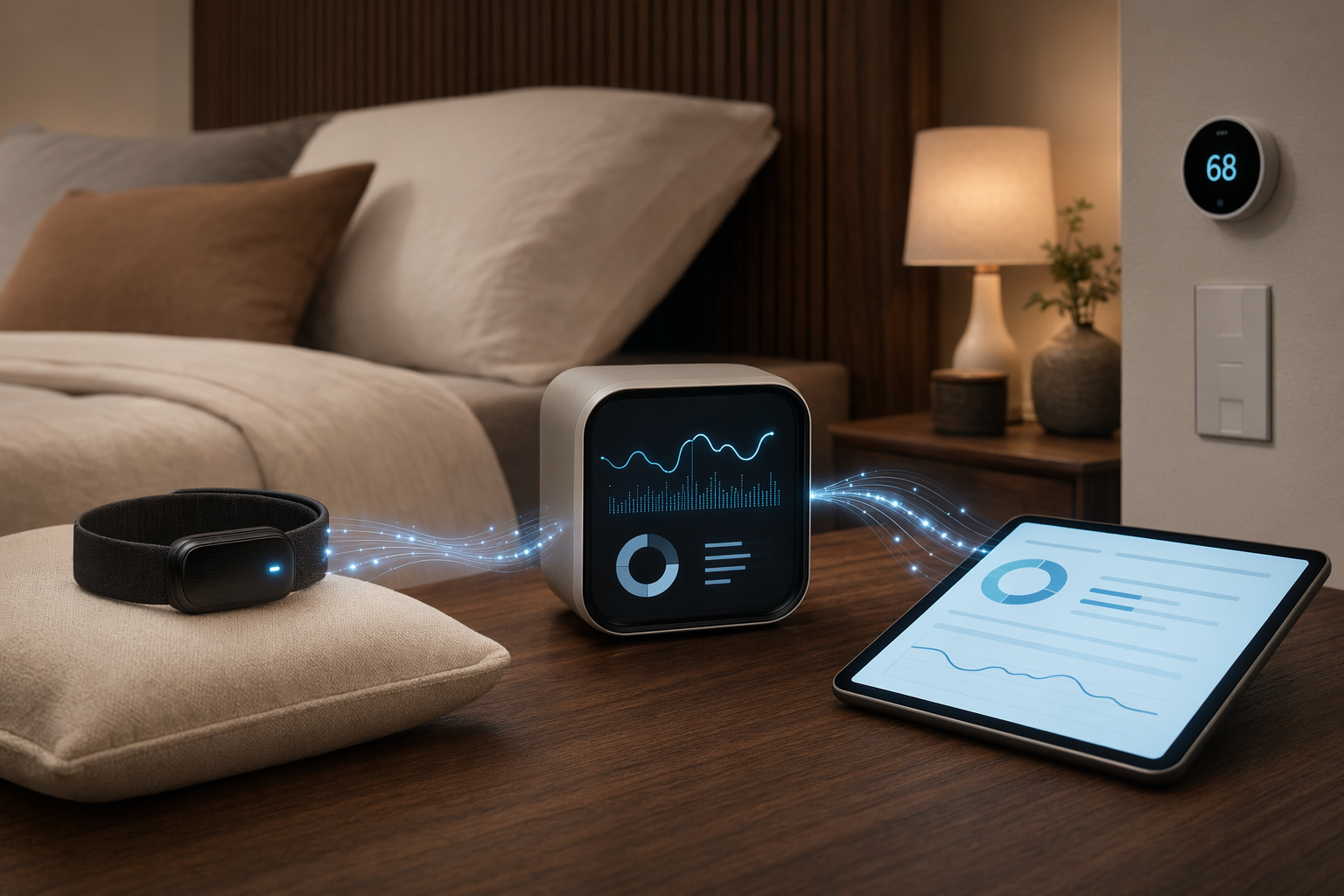
AI Pattern Recognition vs. Traditional Actigraphy
Traditional actigraphy relies on motion-based inference — a wrist sensor detects movement cessation and labels it as sleep. AI-powered tracking employs multi-modal sensor fusion, integrating respiratory rate, heart rate variability, body temperature, and micro-movements to classify sleep stages with clinical-grade accuracy. Machine learning models identify patterns invisible to rule-based algorithms: subtle heart rate oscillations signaling REM transitions, breathing irregularities predicting apnea events, or temperature curves correlating with circadian misalignment. Where actigraphy delivers binary awake/asleep labels, AI systems parse light sleep, deep sleep, and REM phases while flagging anomalies — restless leg movements, periodic limb disruptions, or environmental disturbances — that conventional trackers miss entirely.
Predictive Analytics and Scenario Modeling
AI models trained on nearly 600,000 hours of sleep data now forecast sleep quality based on daytime behavior, schedule shifts, and environmental inputs. Stanford Medicine’s SleepFM predicts more than 100 health conditions from one night’s polysomnography, demonstrating how longitudinal pattern analysis surfaces disease risk years before clinical symptoms emerge. These systems model counterfactual scenarios: if you shift your workout from evening to morning, the algorithm estimates sleep onset latency changes; if you travel across three time zones, it projects circadian re-entrainment duration. Predictive engines learn individual baselines, so the same caffeine intake at 3 PM might flag a sleep disruption alert for one user while clearing another based on metabolic response history.
Real-Time Biometric Analysis
AI processes continuous biometric streams — heart rate variability, respiratory waveforms, movement vectors, to generate actionable insights during sleep itself. Devices like Naptick combine room sensing (CO₂, temperature, humidity) with wearable sync to adjust light therapy and soundscapes in response to detected sleep stages. When HRV drops below a personalized threshold signaling stress arousal, the system might dim warm light or transition to brown noise frequencies proven to stabilize autonomic tone. This closed-loop approach replaces static sleep hygiene checklists with dynamic interventions calibrated to real-time physiology, reflecting the $135 billion sleep technology market’s shift toward adaptive, AI-driven wellness tools.
Beyond data collection, AI is extending into the physical sleep environment itself, transforming bedrooms into responsive systems that adapt to individual needs.
Smart Bedroom Automation: AI-Controlled Sleep Environments
Consumer demand for AI-driven sleep solutions surged during 2020, when internet searches for insomnia-related terms increased dramatically as pandemic disruptions compounded sleep difficulties. This market pressure accelerated development of closed-loop bedroom systems that adjust environmental parameters in real-time based on detected sleep stages.
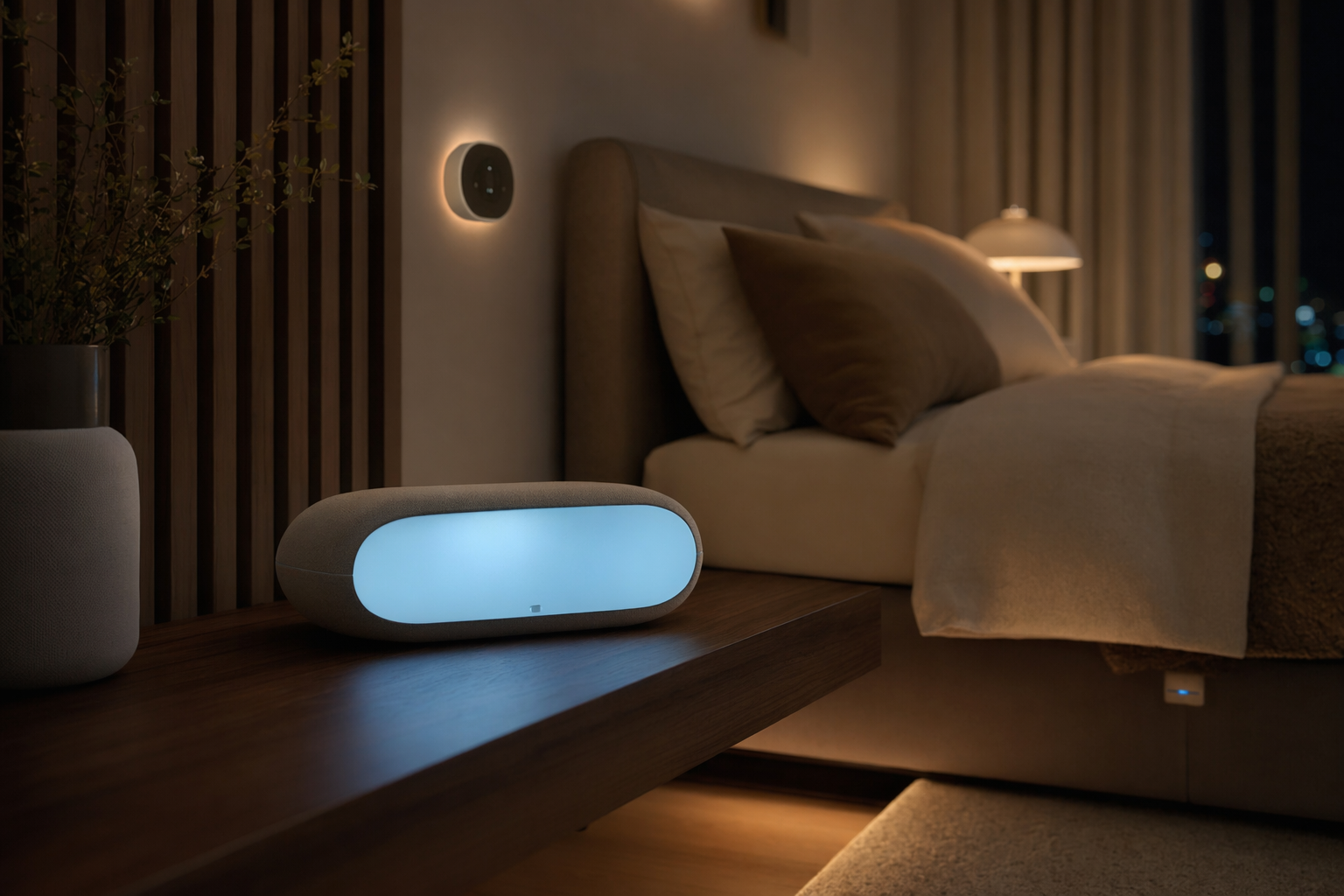
Temperature Regulation and Sleep Architecture
AI-powered thermal systems continuously monitor biometric signals to align mattress and ambient temperatures with circadian rhythm phases. Eight Sleep’s Pod platform exemplifies this closed-loop approach: sensors detect when a sleeper transitions from light to deep sleep, the AI adjusts surface temperature to maintain that stage, then monitors physiological response to verify the intervention worked. By automating micro-adjustments throughout the night, rather than maintaining a static setpoint, these systems optimize each sleep cycle independently.
Adaptive Lighting and Sound Control
AI schedules suppress blue-spectrum light exposure in the evening while programming sunrise simulation sequences calibrated to individual wake patterns. Sound automation layers adaptive masking, algorithms analyze ambient noise profiles and generate counterbalancing soundscapes that attenuate disturbances without waking the sleeper. The AI continuously recalibrates both lighting intensity and acoustic output based on detected sleep depth, reducing reliance on manual pre-sleep adjustments.
Integration with Wearables and Room Sensors
Modern sleep systems synthesize data streams from wearables (heart rate variability, movement), environmental monitors (CO₂, particulate matter, humidity), and smart-home APIs. Naptick tracks CO₂, VOCs, PM2.5, PM10, temperature, humidity, light, and noise throughout the night, feeding these metrics into AI models that correlate room conditions with sleep quality. By cross-referencing wearable biometrics against environmental baselines, the AI identifies which factors, air quality spikes, temperature swings, or ambient noise, most disrupt an individual’s rest, then automates corrective interventions.
The distinction between measuring sleep and actively improving it separates passive monitors from true coaching systems that drive behavioral change.
Personalized AI Sleep Coaching vs. Passive Monitoring
The sleep tech category is bifurcating: devices that measure sleep, and systems that actively change how you sleep. Passive monitoring tools, rings, watches, under-mattress sensors, log REM percentages, heart-rate variability, and nightly scores, then leave you to interpret the data. Closed-loop behavioral coaching platforms flip that relationship: they track, yes, but they also issue daily guidance, monitor your adherence, and update recommendations based on what works. A growing number of millennials are moving away from the “just knock yourself out” approach, trading melatonin gummies for habit-change interventions that address root causes.
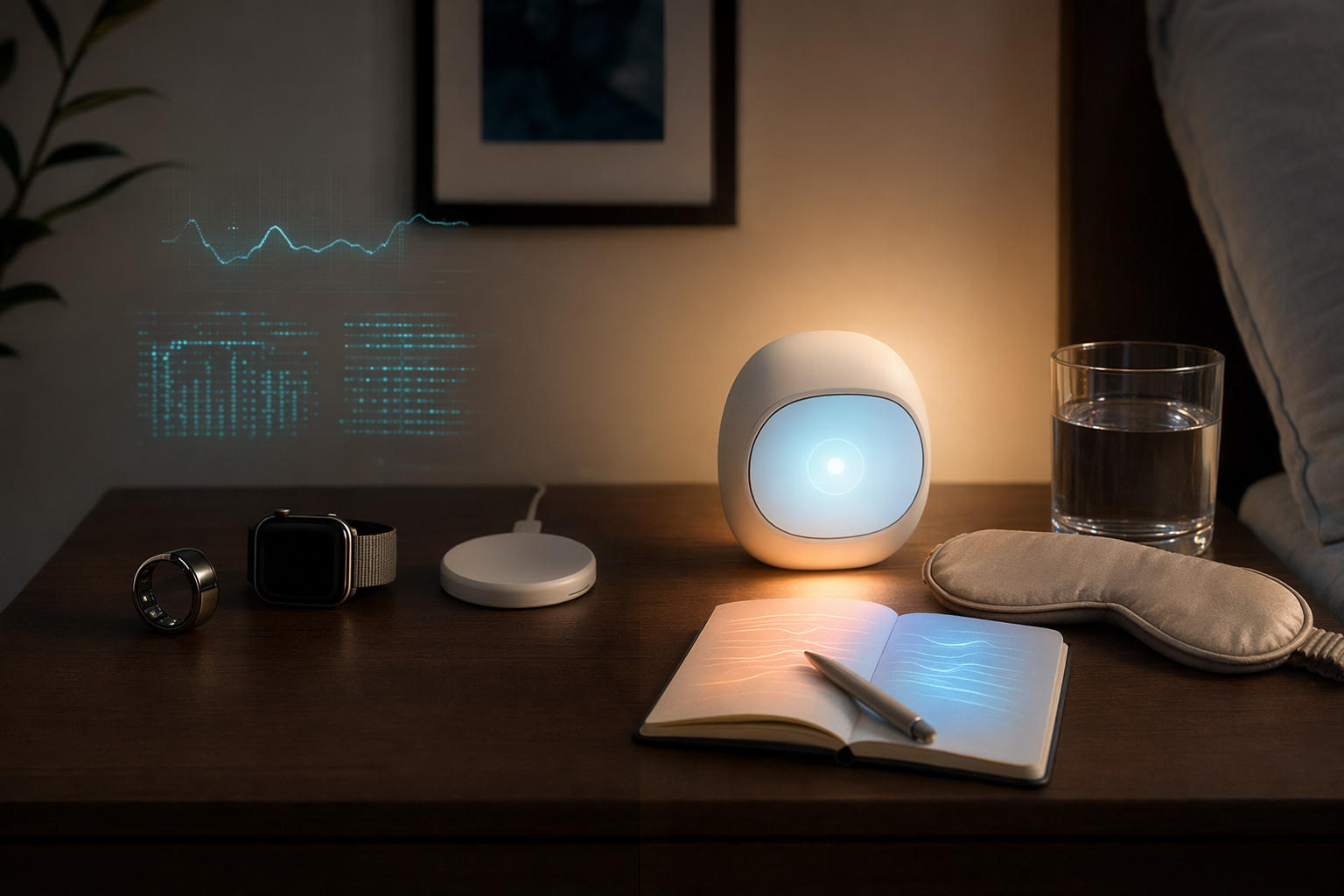
Closed-Loop AI Coaching: Data to Habit Change
True coaching systems close the feedback loop. Digital CBT-I programs illustrate the model: continuous subjective and objective sleep tracking (sleep diaries plus heart-rate sensors) feeds an algorithm that recommends actions, stimulus control, sleep restriction, cognitive reframing, then monitors compliance and adjusts each subsequent recommendation. In one 8-week app-based intervention with 88 participants, insomnia prevalence dropped from 92% at baseline to 67% at follow-up, demonstrating that unguided digital CBT-I with continuous tracking delivers measurable outcomes. This is the architecture of closed-loop coaching: input (sensor data + diary), analysis (AI pattern recognition), output (personalized action steps), and iteration (algorithm adjusts). Naptick’s AI companion functions in this mode, combining room sensing, wearable sync, light therapy, curated soundscapes, and an AI coach into a bedside hub that guides wind-down routines and tracks adherence night over night.
Passive Monitoring: Insight Without Intervention
Passive monitors excel at quantifying: Oura rings report sleep stages and readiness scores; Apple Watch tracks respiratory rate; Eight Sleep mattress pads log temperature cycles and adjust bed warmth. These tools produce rich datasets, but they stop at reporting. If your REM percentage dips, you receive a notification; you must decide whether to adjust bedtime, cut caffeine, or ignore the alert. There is no algorithmic coach watching whether you acted on yesterday’s insight, no feedback loop tightening the recommendation for tonight. For users fluent in self-experimentation, passive data is empowering. For those seeking structured behavior change, it can feel like homework without a teacher.
Screen-Free vs. Phone-Dependent Approaches
The interaction model separates categories further. Phone-dependent apps (Oura, Apple Health, Samsung Health) require users to check smartphones for insights, introducing blue light and notification distractions into the pre-sleep window. Screen-free systems like Naptick eliminate that friction: the AI companion talks you through wind-down, plays soundscapes, and adjusts light therapy without requiring a phone in bed. This distinction matters when the goal is habit formation rather than data curiosity. Search queries for insomnia increased 58% in the U.S. During early 2020 compared to the prior three years, peaking around 3 AM, a signal that people are awake, anxious, and reaching for solutions in real time, not reviewing dashboards the next morning.
| Platform | Core AI sleep function | Clinical validation |
|---|---|---|
| Naptick | Closed-loop coaching: AI guides wind-down, monitors adherence, adjusts nightly routines | Not a medical device; wellness and behaviour-change tool |
| Eight Sleep | Passive monitoring with active temperature control: logs sleep stages, adjusts mattress warmth autonomously | Clinical studies on temperature regulation; no behavioral coaching loop |
| Oura | Passive monitoring: reports sleep scores, HRV, readiness; user interprets and acts independently | Validation studies on sleep-stage accuracy; no intervention component |
| Apple Watch | Passive monitoring: tracks sleep stages, respiratory rate; integrates with Health app for trend review | Research partnerships validating sensor accuracy; no coaching algorithm |
| Samsung Health | Passive monitoring: sleep tracking via Galaxy Watch; trend graphs and comparisons to user baseline | Sensor validation in academic partnerships; insights only, no habit-change loop |
The market is signaling preference for intervention over observation. Consumers are rethinking reliance on melatonin, not because the supplement is suddenly ineffective, but because it doesn’t address the behaviors that prevent sleep in the first place. As sleep wellness evolves, the winning proposition may be the one that doesn’t just tell you what went wrong last night, but walks you through fixing it tonight.
Understanding the regulatory and functional boundaries of AI sleep technology helps consumers choose tools appropriate for their needs, whether wellness optimization or medical diagnosis.
The Wellness-Device Boundary: What AI Sleep Tech Can and Can’t Do
Wellness Tools: Habit Optimization and Sleep Quality
Wellness-focused AI sleep devices optimize behavior and environment without diagnosing or treating medical conditions. Naptick is a wellness device designed to support healthy sleep habits, it is not a medical device and is not intended to diagnose or treat any condition. These tools address the global problem of insufficient sleep, which affects millions but falls outside the scope of diagnosable sleep disorders. By coaching users on sleep hygiene, light exposure timing, and soundscape selection, wellness AI targets the behavioral roots of poor rest, a domain FDA guidance reserves for general wellness claims rather than medical intervention.
Medical Devices: Diagnosis and Treatment
Medical-grade sleep devices diagnose conditions like obstructive sleep apnea, the most prevalent sleep problem among older adults, or deliver prescription digital therapeutics for insomnia. These products require FDA clearance because they make treatment claims. Cognitive behavioral therapy may improve sleep better than pharmacological aids, but when delivered as a regulated digital therapeutic it crosses into medical territory. Consumer interest in sleep solutions is rising, yet most products remain wellness tools that complement, not replace, clinical care.
Privacy Considerations in AI Sleep Data
AI sleep tools collect intimate behavioral data, movement patterns, sound environments, sleep-wake cycles, raising questions about storage, ownership, and third-party access. Naptick may disclose personal information to Shopify, vendors, and other third parties for IT management, payment processing, data analytics, customer support, cloud storage, fulfillment, and shipping; it may also transfer, store, and process personal information outside the country the user lives in. GDPR and HIPAA frameworks govern how sensitive health data must be handled, but wellness devices often operate outside HIPAA’s reach unless they integrate with covered entities. Users evaluating AI sleep tech should review each product’s data-sharing policies and assess whether cloud storage aligns with their privacy expectations.
Consumer adoption patterns reveal the commercial momentum behind AI sleep technology and the factors driving sustained demand.
Market Growth and Consumer Adoption Trends
Sleep Technology Market Projections
The sleep products market is forecast at $13.8 million with a 5.2% CAGR through 2033. The wearable sleep technology segment specifically is expected to reach $58.21 billion by 2030, driven by billions of dollars in new demand as consumers prioritize data-driven rest. AI-powered devices like Naptick are entering this expanding ecosystem, offering room sensing, light therapy, and personalized coaching as alternatives to traditional sleep aids.
Consumer Behavior Shifts
Google searches for “insomnia” and “can’t sleep” peaked in April 2020 during pandemic lockdowns, signaling sustained consumer demand for non-pharmaceutical solutions. Younger demographics increasingly monitor sleep stats with health wearables, moving away from melatonin and over-the-counter pills. However, adoption faces emerging challenges: data privacy concerns, accuracy limitations, and the risk of over-reliance on devices. The market’s growth is real, but critical scrutiny is mounting around how these tools actually improve sleep versus simply quantifying it.
Wearable-based AI sleep trackers like Oura and Apple Watch provide detailed biometric data but require nightly wear and phone dependency; bedside AI companions such as Naptick and SOND offer screen-free interaction and room-level sensing without skin contact. Medical-grade sleep devices deliver diagnostic accuracy and clinical validation but require prescriptions and higher cost; wellness-focused AI tools optimize habits and environment for general sleep quality without medical claims.
As AI sleep technology matures, expect tighter integration between environment automation, wearable biometrics, and behavioral coaching, creating unified systems that adjust room conditions, track physiological response, and guide habit change in a single closed loop. Privacy-first architectures and clinical validation will differentiate leaders from data-aggregation plays.
Try Naptick’s AI sleep companion to experience screen-free coaching, room sensing, and personalized soundscapes designed for sustainable habit change.
Frequently Asked Questions
How does AI sleep tracking differ from traditional fitness trackers?
AI sleep trackers use multi-modal sensor fusion, integrating heart rate variability, respiratory rate, body temperature, and micro-movements, to classify sleep stages and predict quality. Traditional fitness trackers rely on single-axis actigraphy, detecting movement cessation and inferring sleep from motion alone, providing less granular insights.
Can AI sleep technology diagnose sleep disorders like sleep apnea?
Wellness-focused AI sleep tools like Naptick, Oura, and Eight Sleep optimize habits and environment but do not diagnose medical conditions. FDA-cleared medical devices with clinical validation can detect apnea events; wellness tools are designed for habit support, not diagnostic or therapeutic purposes.
Is AI sleep coaching more effective than sleep tracking alone?
Closed-loop coaching systems that recommend actions, monitor adherence, and adjust guidance produce measurable habit change. Digital CBT-I programs demonstrate this model: continuous tracking feeds algorithms that deliver stimulus control, sleep restriction, and cognitive reframing, then adapt based on compliance, driving outcomes beyond passive data collection.
What sleep data does AI collect, and who owns it?
AI sleep tools collect movement patterns, sound environments, heart rate variability, respiratory rate, and sleep-wake cycles. Ownership models vary: some devices store data locally for privacy, while others use cloud storage with third-party sharing for payment processing, analytics, and IT management, raising GDPR and HIPAA considerations.
Do I need a wearable device to use AI sleep technology?
No. Wearable systems like Oura and Apple Watch track biometrics via skin contact, but non-wearable options, Eight Sleep mattress sensors and bedside companions like Naptick, use room-level sensing and environmental monitoring. Non-wearables avoid nightly device wear and phone dependency while delivering coaching and insights.
How accurate is AI sleep stage detection compared to clinical polysomnography?
Consumer AI sleep devices achieve approximately 80 to 85% agreement with polysomnography for sleep stage classification, whereas clinical PSG remains the gold standard. Wellness devices provide sufficient accuracy for habit optimization and behavioral insights but are not intended for diagnostic-grade medical assessments.
Will AI sleep technology replace sleeping pills or melatonin?
AI coaching offers a sustainable behavior-change alternative to pharmaceutical and supplement reliance for insufficient sleep and poor habits within the wellness scope. Consumer trends show growing preference for non-pharmaceutical solutions, but diagnosed sleep disorders still require clinical treatment, not wellness-tool substitution.
Sources
- New AI model predicts disease risk while you sleep – med.stanford.edu (2026)
- Sleep Products Industry: ZipDo Education Reports 2026 – zipdo.co (2026)
- Eight Sleep raises $100M to expand its AI-powered sleep tech – techcrunch.com (2025)
- AI and Sleep Apnea: How New Technology Is Changing the Way We Understand Sleep – www.apria.com
- Continuous sleep tracking in digital CBT-I: Efficacy and insights – www.sciencedirect.com (2025)
- Sleep-Obsessed Millennials Are Ditching Melatonin… Here’s Why – www.vice.com
- Google Trends reveals increases in internet searches for insomnia – pure.eur.nl
- Google Trends reveals increases in internet searches for insomnia – pubmed.ncbi.nlm.nih.gov
- Worldwide prevalence of sleep problems in community-dwelling older adults – www.sciencedirect.com
- The Global Problem of Insufficient Sleep and Its Serious Public Health Implications – pmc.ncbi.nlm.nih.gov
- Sleeping Pills: How They Work, Side Effects, Risks & Types – my.clevelandclinic.org
- The Meteoric Rise—And Problematic Future—Of Wearable Sleep Tech – forbes.com (2026)